November 9, 2026
Setting boom section shutoff width for patch maps with tight turns
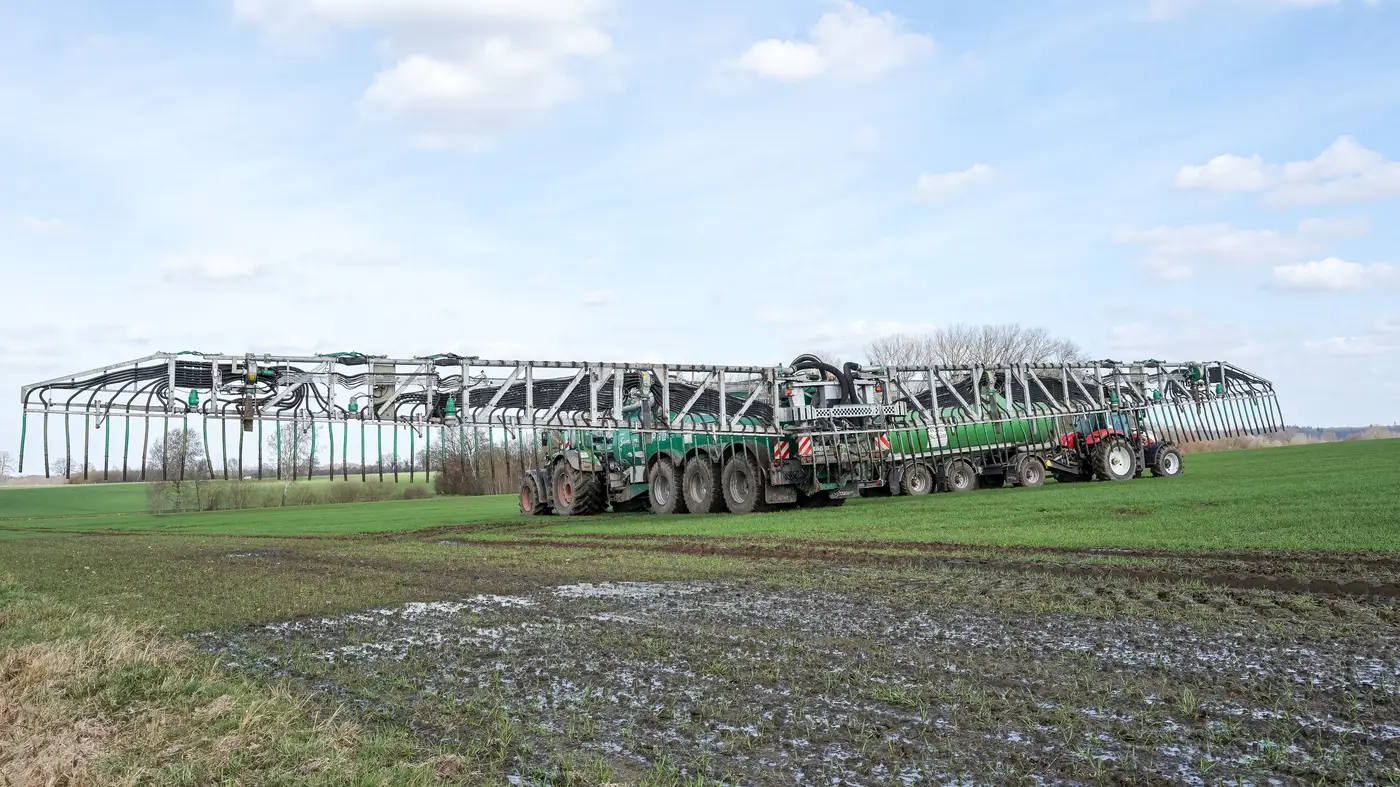
Section shutoff width is the one setting on the controller that decides whether a patch map actually saves you anything on a field full of curves. Get it wrong and you're back to blanket rate on every turn row, just with extra software sitting between you and the nozzle.
Why turns break section shutoff first
Straight passes are forgiving. The controller sees a polygon boundary coming up, shuts the section, the boom clears it, done. Turns are where the math gets ugly. On a curved pass the inside sections of the boom travel slower than the outside sections. If your section width is too wide for that swing, the inside sections sit on a patch boundary longer than the valve response accounts for, and you either skip a patch edge or carry spray past it.
The tighter the turn radius on a field, the more this bites. A contour-planted block with 60-80 m turn radii is a different shutoff problem than a square 40-ha field with two headland turns a pass.
Matching section width to the patch map
The patch map gives you polygon edges down to leaf scale, 2 cm GSD or finer off the UAV pass. Your boom section width is almost never going to match that resolution, and it doesn't need to. What it needs to match is your controller's valve lag and the turn radius on that particular field.
Rule of thumb from contractors running section control on irregular ground: narrower sections buy tighter shutoff on curves, but only up to the point where the valve can keep up. A 3 m section that closes late is worse than a 6 m section that closes clean, because the narrow one gives you a ragged spray line that still oversprays the patch edge, and now you've spent the resolution for nothing.
Steps that hold up in the field:
- Pull the tightest turn radius on the field from the as-planted or guidance file; a field average hides the corner that actually matters.
- Check the controller's documented valve response time at your travel speed through that turn.
- Set section width so the inside-boom section clears the patch boundary within one valve cycle at that speed.
- Re-check against the densest patch cluster near a headland. Tight turns and clustered patches compound the lag together.
If steps 3 and 4 disagree, narrower wins. Better to undertreat a sliver at a patch edge on one pass than carry blanket rate around every curve on the field.
Straight pass versus curved pass
On a dead-straight run, section width mostly sets how fine your treat map granularity is. Ground speed and lag are consistent across the boom, so wider sections still hit most patches cleanly. Tight turns remove that consistency. The same width that worked fine down the long rows can leave a visible skip or overlap band through every curve, which is usually the first thing an operator notices when a pass doesn't match the plan on the ground.
If you're mapping patches at leaf scale and still watching the rig blanket the curves, check section width before you blame the map. Weed Mapping builds the spray-ready patch map to match the pass that flew it, so the boundaries you're setting shutoff against are tied to that field's actual geometry, not a generic grid.
Send over a field with tight turns and we'll walk through where the shutoff setting needs adjusting for it.